What's in a Name? The Six Words Behind Aelira
People ask where the name Aelira comes from. It's not a random word — it's a mission statement hiding in plain sight.
People ask us where the name Aelira comes from. Did we hire a branding agency? Run it through a startup name generator? Pick something that sounded vaguely futuristic and hope for the best?
None of the above. Aelira is an acronym. Six letters, six words, each one representing a principle that shapes every decision we make. Think of it less as a company name and more as a mission statement hiding in plain sight. This is the first time we've explained it publicly, so let me walk you through each letter and what it means to us.
A — Accessibility
Everything starts here. Accessibility is the foundation that the entire platform is built on, and it is the reason this company exists.
The numbers are sobering. The WebAIM Million study consistently finds that over 96% of home pages have detectable WCAG failures. But course materials in higher education are often worse than the open web. Think about the typical university department: scanned PDFs that are essentially photographs of text, lecture slides with images and no alt text, videos without captions, and spreadsheets that rely entirely on colour to convey meaning. A screen reader encounters these documents and finds nothing useful.
At Aelira, we scan eight document types — PDF, PowerPoint, Word, Excel, LaTeX, images, video, and websites — against WCAG 2.1 AA and PDF/UA standards. We chose to go broad because accessibility is not a single-format problem. A student's experience is shaped by every piece of content they encounter across a semester, not just the ones that happen to be HTML.
E — Equity
If accessibility is the what, equity is the why.
Twenty-six percent of adults in the United States have some form of disability, according to the CDC. In higher education, students with disabilities graduate at significantly lower rates than their peers. The reasons are complex and systemic, but one contributor is straightforward: when course materials are inaccessible, students either spend disproportionate time and energy working around the barriers or they disengage entirely. Neither outcome is acceptable.
Equity means every student gets the same quality of learning experience — not a retrofitted afterthought stapled onto existing content after someone files a complaint. It means that the student using a screen reader gets the same information from a chart as the student looking at it. It means that the Deaf student watching a lecture recording gets the same nuance from captions as the student listening to audio. These are not accommodations in the traditional sense. They are the baseline of a fair education.
L — Learning
We chose higher education deliberately. This is not a generic accessibility tool looking for a vertical — it is a platform built for the specific, messy, beautiful complexity of how universities create and share knowledge.
Higher education has challenges that other sectors do not. LaTeX is used by the vast majority of STEM departments to produce papers, problem sets, and textbooks, and its accessibility tooling is years behind mainstream document formats. Departments have accumulated decades of legacy PDFs that nobody has the time or budget to remediate manually. Faculty are deep experts in their disciplines, but they were never trained in accessibility — and expecting them to become overnight experts in WCAG success criteria is unrealistic.
The April 2026 ADA Title II compliance deadline has created urgency across US institutions, but the underlying need has always been there. The deadline is a catalyst, not the cause. Students with disabilities have been navigating inaccessible materials for as long as digital course content has existed. We built Aelira for the learning domain because that is where the gap between what exists and what should exist is widest.
I — Inclusion
Compliance and inclusion are related but they are not the same thing. A document can pass every automated accessibility check and still be functionally unusable for someone with a disability. Compliance is the floor, not the ceiling.
True inclusion means content that works seamlessly with screen readers, keyboard-only navigation, and cognitive accessibility tools. It means considering colour vision deficiency when choosing chart palettes, not just ensuring a minimum contrast ratio. It means thinking about reading order — the sequence in which a screen reader encounters content — rather than just whether tags exist. It means writing alt text that actually conveys meaning rather than mechanically describing visual elements.
We think about inclusion as a design philosophy, not a checklist. When we build a feature, we ask whether it genuinely improves the experience for a student relying on assistive technology, not just whether it produces a passing score on an automated scan. The distinction matters, because a university that achieves technical compliance but delivers a poor experience has solved the legal problem without solving the human one.
R — Remediation
This is the word that separates us from most of what already exists in the accessibility space.
The market is full of tools that detect problems. Detection is valuable, but detection without remediation is a to-do list, not a solution. When a faculty member with two hundred PDFs accumulated over fifteen years of teaching gets a report listing three thousand accessibility issues, that is not help. That is a burden. They do not have the time, the tools, or the training to fix those issues manually, and their institution rarely has the budget to hire someone to do it for them.
Aelira's approach inverts the model. Upload broken content. Get fixed content back. Our AI-powered auto-remediation handles the mechanical work — generating alt text for images, restructuring heading hierarchies, adding table headers and scope attributes, correcting reading order, tagging content streams with proper PDF structure. The output is a document that has been genuinely repaired, not a document with a report attached to it explaining everything that is wrong.
Remediation is hard engineering. It requires understanding the internal structure of each document format at a granular level, and it requires AI models that can interpret visual and structural context accurately. We have invested heavily here because we believe it is the only approach that scales.
A — Automation
The final letter brings the entire mission together.
Faculty spend forty or more hours manually remediating a single course worth of materials. Multiply that across hundreds of courses per department, thousands per institution, and the mathematics simply does not work. There are not enough hours, not enough staff, and not enough budget to remediate the backlog manually. The deadline does not care.
Automation is not about replacing human judgment. It is about handling the mechanical, repetitive work so that humans can focus on the decisions that actually require expertise. The AI generates a first draft of alt text for a complex scientific diagram; a subject matter expert reviews it, adjusts the terminology, and approves. The system restructures a PDF's heading hierarchy based on visual analysis and semantic context; a faculty member confirms that the logical structure matches their intent. That collaborative model — AI does the heavy lifting, humans provide the domain knowledge — is the only way to close the gap between where institutions are today and where they need to be.
Automation also means integration. We connect with Canvas, Blackboard, Google Workspace, and Microsoft 365 so that remediation happens where content already lives, not in a separate workflow that requires faculty to change their habits.
Six Words, One Mission
That is what AELIRA stands for. Not just a name — a checklist for everything we build. Accessibility, Equity, Learning, Inclusion, Remediation, Automation. Every feature gets measured against these six words. Every design decision, every engineering trade-off, every line of code.
When we are deciding whether to build something, we ask: does this make documents more accessible? Does it advance equity in education? Is it tuned for the learning domain? Does it promote genuine inclusion beyond compliance? Does it actually fix problems rather than just identifying them? Does it automate the work that humans should not have to do manually?
If the answer to those questions is yes, we build it. If not, we do not — no matter how appealing the feature might look on a roadmap.
If your institution is navigating the April 2026 deadline and looking for a partner that treats accessibility as a mission rather than a product category, we would love to talk. Learn about our pilot program and see what Aelira can do for your department.

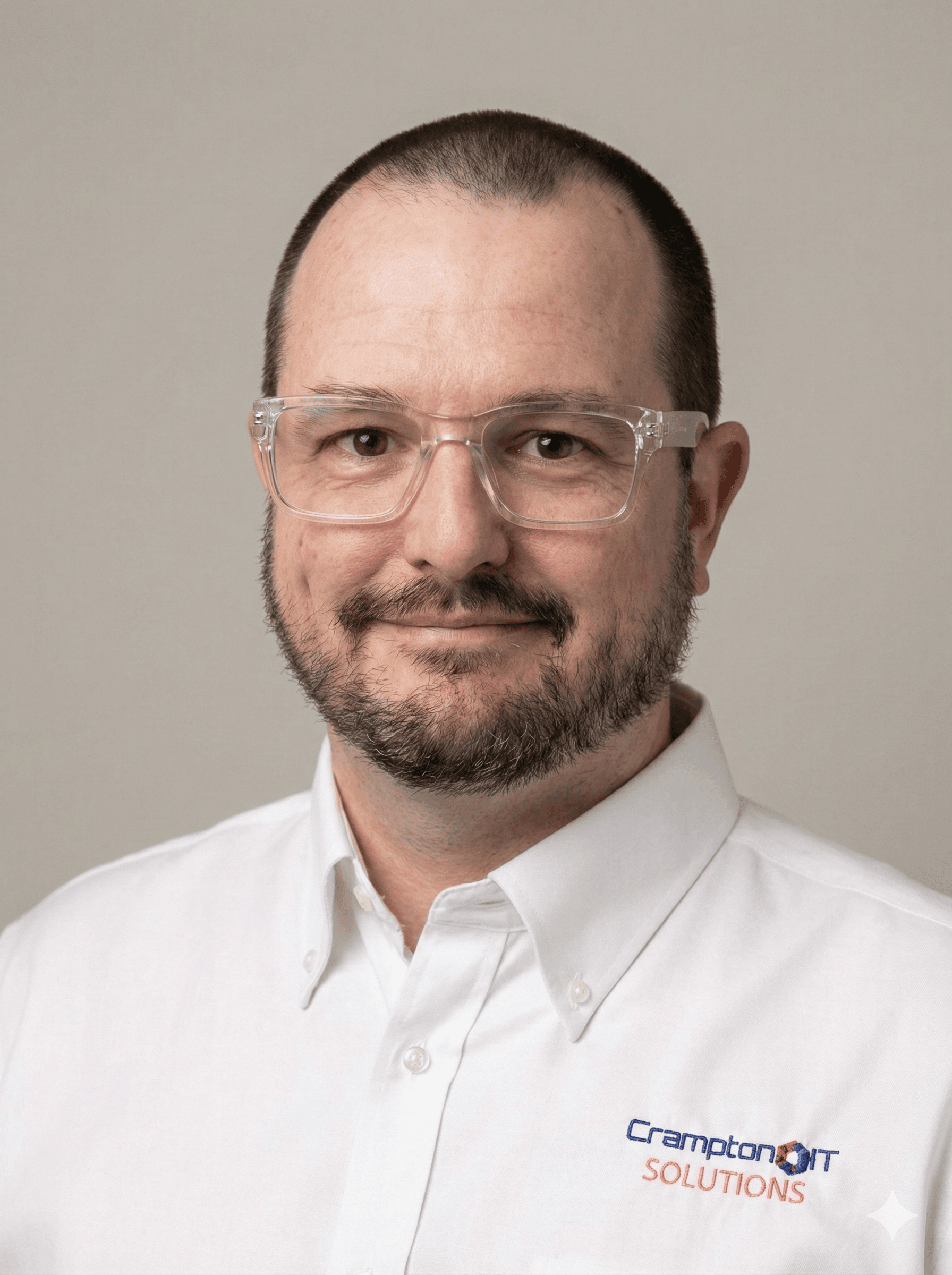
RD (Reg) Crampton
•Founder & CEOFounder, CEO & lead developer of Aelira. Passionate about making education accessible to everyone. Building the tools universities need to meet accessibility compliance.
Related Articles
How Do I Make LaTeX Documents Accessible?
LaTeX produces beautiful typeset documents, but the PDFs are inaccessible by default. Learn how to use tagpdf, LuaLaTeX, and alt text to create PDF/UA-compliant output.
What Is the Easiest Way to Create Accessible Documents?
The easiest path to accessible documents starts at the source. Use built-in heading styles, add alt text as you go, and export correctly — here's the step-by-step guide.
What Are Australian University Accessibility Requirements?
Australian universities must comply with the DDA, the Disability Standards for Education, and WCAG 2.1 AA. Here's what that means in practice and how to get compliant.
Ready to achieve accessibility compliance?
Join the pilot program for early access to Aelira's AI-powered accessibility platform
Apply for Pilot